
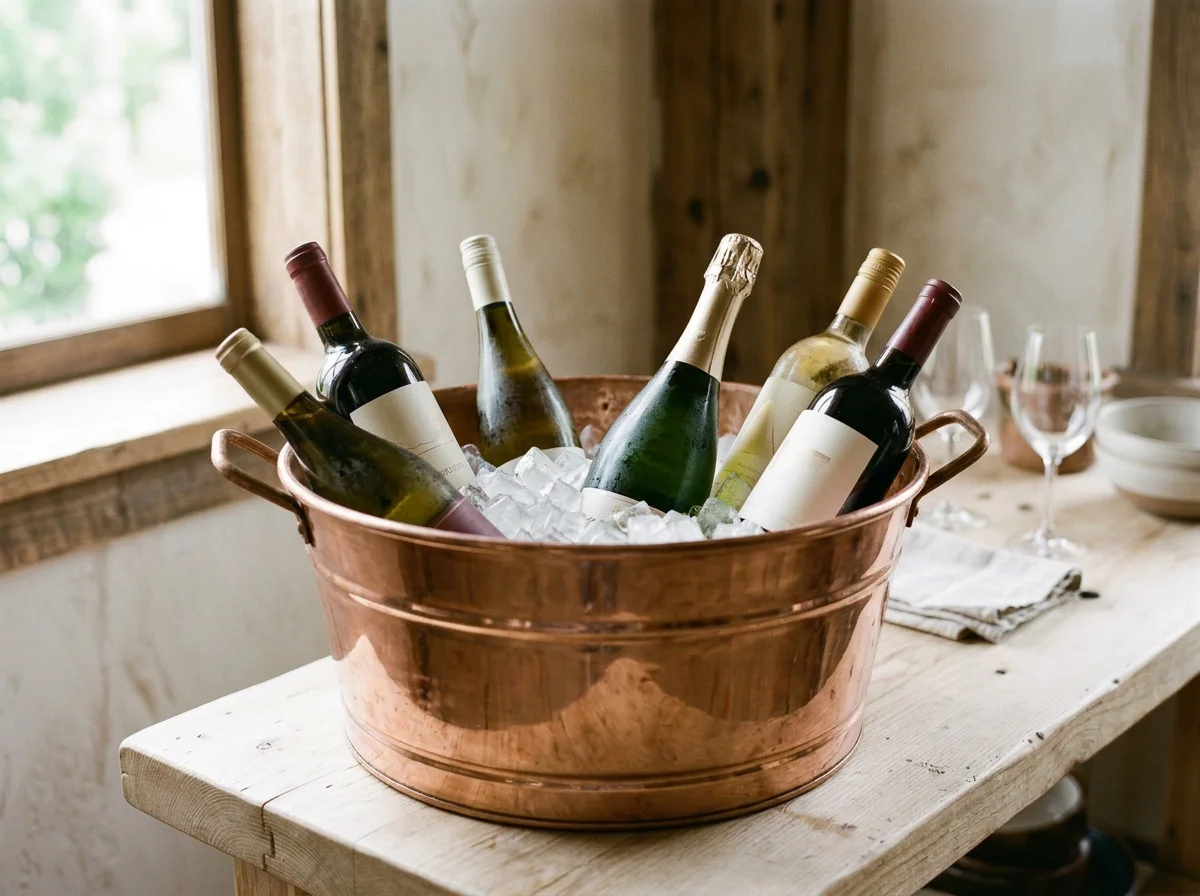
Red, White and Sparkling Wines are chilled in an ice bath.
Most red wines taste better slightly cooler than your living room. The old rule says to serve red wine at "room temperature," but it came from European homes and cellars that were often around 60–65°F. Today most homes sit at 70–72°F, and at that temperature red wine starts to taste flat, soft and hot with alcohol.
So yes, chill your red wine, just not as much as your white. A light red like Pinot Noir is best around 55–60°F. A bold Cabernet Sauvignon is best around 60–65°F. Both are cooler than a typical room and warmer than your fridge.
You don't need to be a wine expert to get this right. The chart below covers every major style, and the rules behind it are simple.
Why serving temperature changes how wine tastes
Temperature is the easiest way to make the same bottle taste better or worse:
Too warm: alcohol becomes more noticeable, fruit tastes jammy, and the wine feels heavy and flat.
Too cold: aromas shut down, so the wine smells of very little. In reds, tannins (the drying, grippy feeling) taste harsher and more bitter.
Just right: the fruit, acidity and aroma come through in balance, the way the winemaker intended.
A rule of thumb: the lighter and crisper the wine, the colder it can go. The fuller and more tannic it is, the warmer it should be served.
Wine serving temperature chart
| Wine Style | Serve at (°F) | Serve at (°C) | Examples |
|---|---|---|---|
| Sparkling | 43–48°F | 6–9°C | Champagne, Prosecco, Cava |
| Light, crisp whites | 45–50°F | 7–10°C | Sauvignon Blanc, Pinot Grigio, dry Riesling |
| Rosé | 46–52°F | 8–11°C | Provence rosé, Grenache rosé |
| Sweet & dessert whites | 45–50°F | 7–10°C | Moscato, Sauternes, late-harvest Riesling |
| Full-bodied whites | 50–55°F | 10–13°C | Oaked Chardonnay, Viognier |
| Light reds | 55–60°F | 13–16°C | Pinot Noir, Gamay (Beaujolais) |
| Medium reds | 58–63°F | 14–17°C | Merlot, Grenache, Sangiovese (Chianti) |
| Full-bodied reds | 60–65°F | 16–18°C | Cabernet Sauvignon, Syrah/Shiraz, Malbec |
| Port & fortified | 60–65°F | 16–18°C | Tawny Port, Ruby Port |
Which red wines are best chilled?
Chilled red wine has become a trend, and for good reason. The reds that work best a little colder share three traits: they're light-bodied, low in tannin and full of fresh fruit.
Pinot Noir: bright cherry and berry flavors stay lively at 55–60°F.
Gamay (Beaujolais): juicy and light, and great around 55°F.
Lambrusco and other light, fruity reds: serve these cool, almost like a rosé.
Big, tannic reds like Cabernet Sauvignon and Syrah should be only lightly cooled. Chill them too much and the tannins turn harsh.
How to chill red wine without special equipment
Fridge: 20–30 minutes before serving brings most reds from room temperature into range.
Ice bucket: fill it with ice and water, not just ice, and 10 minutes is usually enough.
Over-chilled? Pour a glass and wait a few minutes. Your hand around the bowl warms it quickly.
Should you refrigerate red wine after opening?
Yes. Cold slows down oxidation, the process that makes opened wine taste flat and sour. Re-cork the bottle and put it in the fridge, then take it out 30 minutes before your next glass so it warms back into range. Most reds stored this way drinkable for about 3–5 days. For more methods, see our guide on how to keep an opened bottle fresh.
Your living room is 72°F. Your Cabernet wants 62°F.
That 10-degree gap is the difference between a flat glass and a great one. You could keep a thermometer in your wine rack and this chart on your fridge, or you could let the Maître de Vin handle it with one touch.
20 expert wine profiles: choose the style, like Pinot Noir, Chardonnay or sparkling, and the machine sets the right serving temperature with one touch.
Two independent chambers: keep a white and a red at their own temperatures, from 45°F to 68°F, so both are ready at the same time.
Up to 14 days of freshness: gas-free preservation keeps an opened bottle fresh, so you can pour one glass tonight and the next one later in the week.
No wine knowledge needed, and no rush to finish the bottle.
FAQ
Is it OK to drink red wine cold? Yes. Many light reds taste better cool. Just avoid fridge-cold (around 38°F) for full-bodied reds, where the cold makes tannins taste bitter and hides the aroma.
What temperature should Pinot Noir be served at? Around 55–60°F (13–16°C), a little cooler than most other reds.
What temperature should Cabernet Sauvignon be served at? Around 60–65°F (16–18°C). That's cool, not cold.
What temperature should Champagne be served at? Around 43–48°F (6–9°C). Very cold Champagne loses its aroma, and warm Champagne loses its bubbles faster.
What is the best temperature for white wine? Crisp, light whites taste best at 45–50°F, and fuller whites like oaked Chardonnay at 50–55°F. Straight from the fridge is usually a little too cold, so give it 10–15 minutes out before pouring.