
Aeration vs Decanting: Let Wine Breathe Right
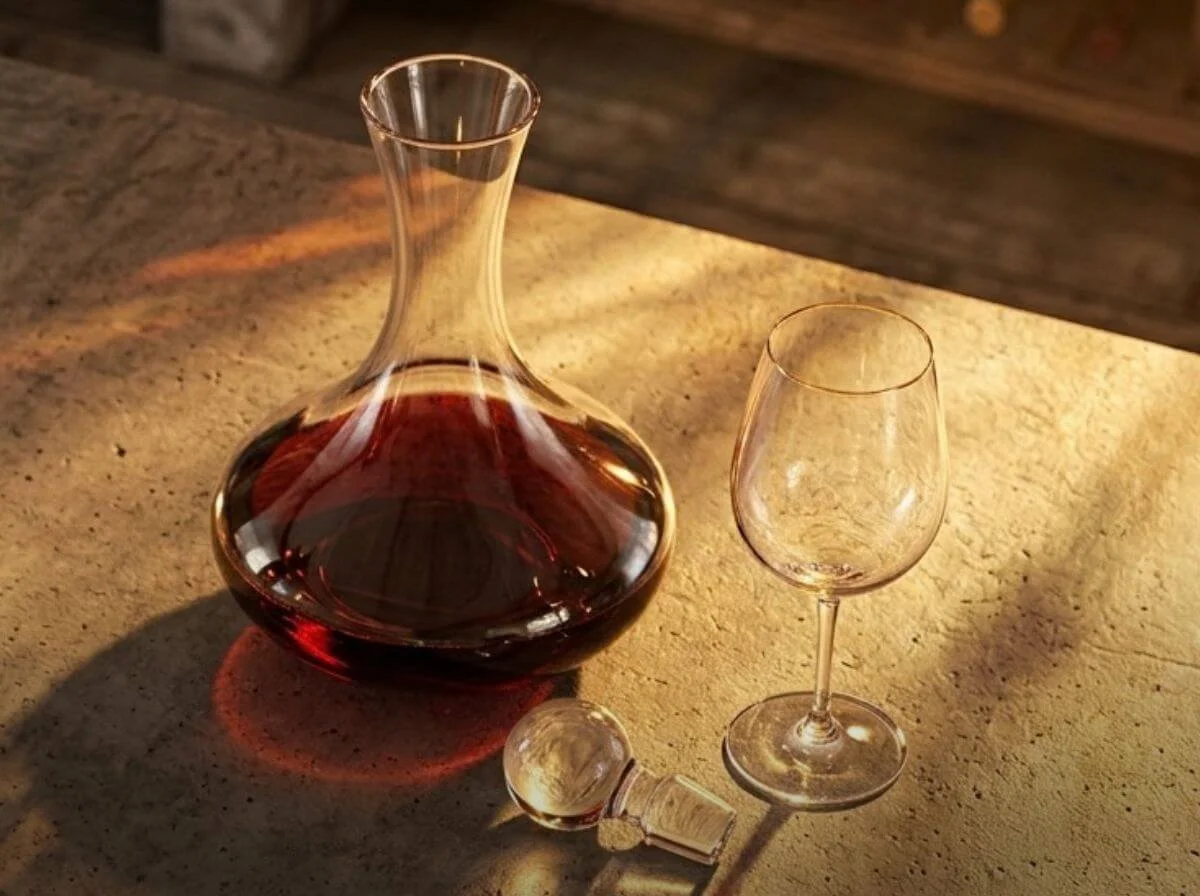
In our last post, oxygen was the villain. Over days, it flattens an opened bottle. In the first few minutes after pouring, though, oxygen helps wine open up. A little air can lift aroma, soften a young wine's rough edges, and help a closed bottle show more fruit.
There are two common ways to add that air: wine decanting and wine aeration. Decanting moves the whole bottle into a vessel and lets it rest. Aeration mixes air into the wine as it pours. Both have a place. Here is how they differ, which wines benefit, and where Maitre de Vin fits.
What Decanting Does
Decanting is pouring wine into a wide glass decanter and letting it sit before serving. It does two jobs:
Separating sediment: older reds can leave a harmless but gritty deposit. Slow pouring keeps that sediment in the bottle.
Adding air: the wide base of a decanter gives wine more contact with air, so it opens over 30 minutes to a couple of hours.
Fun fact: Decanting is older than the wine bottle as we know it. Before sealed glass bottles became common, wine was drawn from casks into jugs and carafes for the table. The elegant decanter came from that habit.
The catch: decanting is all or nothing. Once the whole bottle is in the decanter, every drop is exposed to air. If you do not finish it, the wine will fade faster. It also takes planning, because the best results come after the wine has had time to rest.
What Aeration Does
Aeration mixes air into wine quickly, usually as it pours. Instead of letting the whole bottle breathe slowly, you give each glass a quick burst of oxygen.
The science bit: As wine moves through a narrow channel in a wine aerator, it pulls air in through small side holes and blends it into the stream. That is the gurgling sound you hear as you pour.
The significant advantage is control. You can aerate one glass and leave the rest of the bottle alone. That is ideal when you only want one or two glasses. And there is no wait: the wine is ready at once.
Decanting vs Aeration at a Glance
| Feature | Decanting | Aeration |
|---|---|---|
| How it works | Slow breathing in a wide vessel | Fast mixing of air as you pour |
| Time needed | 30 minutes to 2 hours | Instant |
| Removes sediment | Yes | No |
| Portion | The whole bottle at once | Glass by glass |
| Leftover wine | Keeps fading once exposed | Rest of the bottle stays protected* |
| Best for | Dinner parties, older reds with sediment | Everyday glasses, weeknights, mixed preferences |
| Cleanup | Hand-washing a fragile decanter | Minimal |
*When the bottle stays sealed under vacuum, the rest of the wine stays protected, as it does in Maitre de Vin.
Which Wines Benefit from Air?
Not every wine needs it, and a few are better without it.
Young, bold reds love air. Cabernet Sauvignon, Syrah/Shiraz, Nebbiolo, and Malbec are often tight and tannic when first opened. A little air brings out fruit and smooths the edges.
Full-bodied whites can benefit too. Rich Chardonnay or white Burgundy can show more aroma after some air. Many people never think to try it.
Light, fresh wines need little. Crisp whites and most rosés are made for bright, fresh flavors, so they do not need much air.
Old, delicate wines need care. Highly mature reds can fade quickly once exposed. Decant them gently for sediment, then drink them soon.
Try this at home: Pour two glasses of the same young red. Aerate one and leave the other alone. Taste them side by side. The difference in aroma is often easier to notice than people expect.
Myths and Surprises
Myth: pulling the cork lets the wine breathe. The neck of the bottle is tiny, so very little air reaches the wine. Leaving an uncorked bottle on the table for an hour does almost nothing.
Surprise: your glass is a wine aerator. Swirling spreads wine across the inside of the bowl and exposes more of it to air. That is why wine glasses are shaped the way they are.
Surprise: some chefs have blended wine. Food scientist Nathan Myhrvold made hyperdecanting famous by blitzing wine for a few seconds to aerate it fast. It works for some young reds, but it is not the most elegant way to serve dinner.
Air can unexpectedly clear odd smells. A freshly opened wine can smell a little like struck match or rubber. Those sulfur notes often fade after a few minutes of air.
Myth: more air is always better. After a point, oxygen stops helping and starts harming. The goal is the right amount for the glass in front of you, then protection for the rest of the bottle.
The Best of Both: Where Maitre de Vin Fits
Decanting gives a whole bottle air but leaves the leftovers exposed. Aeration handles one glass at a time but does not protect the rest. Maitre de Vin does both jobs, decanting and aerating, while keeping the rest of the bottle protected:
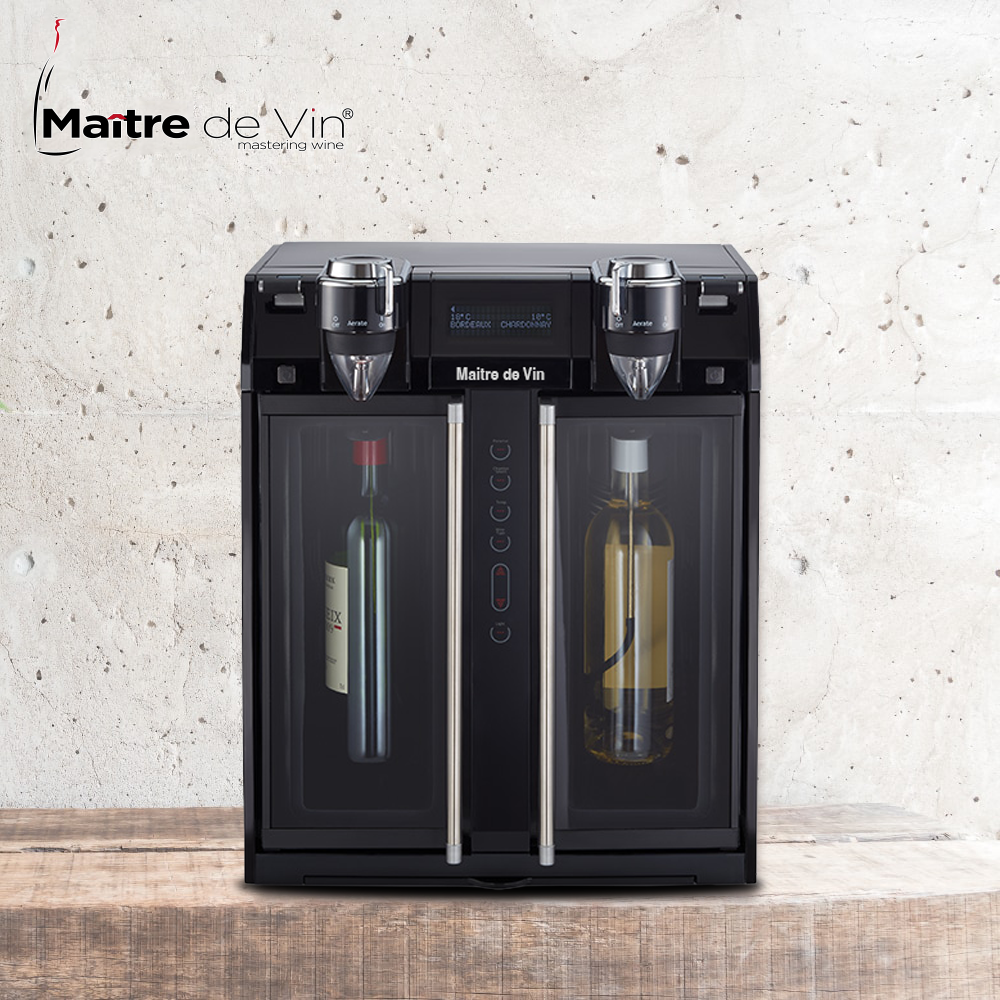
Built-in decanting: a fine metal mesh filter sits at the end of the tube that draws wine from the bottle. It works like a decanter, catching sediment and leaving it behind in the bottle, so only clear wine reaches your glass. No careful pouring or watching for sediment is needed.
Instant aeration, your choice: use wine aeration on demand as you pour, or pour without it for lighter wines that do not need it.
The rest stays protected: the bottle stays under vacuum, and a built-in sensor re-vacuums it automatically if pressure rises, so opened wine stays fresh for up to 14 days*.
Served at the right temperature: 45°F-68°F (7°C-20°C), with 20 preset wine types, because aroma depends on temperature as much as air.
Two bottles, two moods: keep a bold red and a crisp white ready side by side, each in its own chamber.
No waiting, no fragile decanter to wash, and no half-full bottle fading on the counter. Just the right glass, every time.
*Preservation time depends on the wine. Designed for still red, white, and rosé wines.
Coming soon to the US and Canada. Join the waitlist at maitredevin.com to be the first to know when it lands.
Q&A
Should I decant or aerate a young red wine?
Young, bold reds usually benefit from air, so both methods can help. Decanting is best when you plan to serve the whole bottle and have 30 minutes to 2 hours. Aeration is better when you want instant results, want to pour glass by glass, or want to keep the rest of the bottle protected.
Does every wine need air before serving?
No. Young Cabernet Sauvignon, Syrah/Shiraz, Nebbiolo, and Malbec often open up with air, and rich Chardonnay or white Burgundy may show more aroma after a little exposure. Crisp whites and most rosés usually require little or no aeration, while very old, delicate reds should be handled carefully because they can fade quickly.
Why is simply pulling the cork not enough to let wine breathe?
The bottle neck exposes only a small surface area of wine to air, so very little oxygen reaches the wine when an opened bottle sits on the table. Swirling in a glass, using an aerator, or pouring into a decanter exposes much more wine to air and has a bigger effect.
Sources
Wine Enthusiast — Aerator vs. Decanter: Which is Better?: aeration, decanting and how each method affects wine.
Wine Folly — Beginners Guide to Decanting Wine: decanting basics, sediment removal and exposing wine to oxygen.
Wine Folly — Why Swirling Makes Wine Taste Better: swirling, oxygen exposure and how aeration affects aroma and flavor.
Wine Folly — How Long to Decant Wine?: recommended decanting times and how wine style affects aeration.
Wine Folly — Oxygen and Wine: What's Too Much and Too Little?: oxygen exposure, wine aeration, oxidation and aging.